Few side hustles offer the speed, flexibility, and return on investment that clothes flipping delivers. By sourcing undervalued garments from thrift stores, estate sales, or online marketplaces and relisting them to motivated buyers, thousands of everyday resellers are turning extra closet space into serious cash flow.
Whether you want to make an extra $500 a month or build a full-time reselling business, learning how to flip used clothes for profit comes down to a few core skills: spotting underpriced inventory, recognizing high-value brands, and listing items where buyers are actively looking.
In this guide, we will break down the exact strategies top resellers use to source, authenticate, price, and sell secondhand apparel for maximum margins.
Key Takeaways
| Aspect | Key Strategy / Benchmark |
|---|---|
| Average Profit Margin | 50% – 80% per item |
| Startup Costs | $20 – $100 for initial inventory |
| Top Sourcing Spots | Goodwill Bins, Estate Sales, Vinted, Facebook Marketplace |
| Best Brand Categories | Vintage Streetwear, Heritage Workwear, Premium Outdoor |
| Core Platforms | eBay, Poshmark, Vinted, Mercari |
What Is Clothes Flipping and Why Is It So Profitable?
At its core, clothes flipping (also known as clothing arbitrage) is the process of buying pre-owned or clearance apparel at a low price and reselling it on digital marketplaces for fair market value.
What makes this model so lucrative is the massive disconnect between local supply and global demand. A vintage single-stitch t-shirt might sit in a suburban garage sale marked for $1 because the owner wants to clear out space. On eBay or Poshmark, however, a collector thousands of miles away will gladly pay $60 or more for that exact piece.
+-------------------+      +-------------------+      +-------------------+
|  Local Sourcing   | ---> | Digital Platform  | ---> |   End Collector   |
| (Thrift/Yard Sale)|      |  (eBay / Vinted)  |      |   (Global Buyer)  |
|   Buy at: $2.00   |      | List at: $50.00   |      | Pays Fair Market  |
+-------------------+      +-------------------+      +-------------------+
The Rise of Sustainable Fashion and Reseller Culture
Secondhand apparel is no longer just for budget shoppers; it has become a mainstream consumer trend driven by sustainability and individual style.
According to ThredUp's 2023 Resale Report, the global secondhand apparel market is projected to reach $350 billion by 2027. Furthermore, research compiled by Statista shows that over 40% of US consumers purchased secondhand apparel in 2022. Driven by Gen Z and Millennial buyers seeking unique vintage aesthetics and eco-friendly shopping habits, the US secondhand market is expanding nine times faster than the traditional retail clothing sector.
Low Startup Costs vs. High Profit Margins
Unlike drop-shipping or private-label e-commerce, clothes flipping requires almost zero upfront capital. You do not need to order inventory from overseas manufacturers or store hundreds of identical items in a commercial warehouse.
With $50 in your pocket, you can walk into a local thrift store, pick up five to ten high-margin brand garments, and relist them online the same evening. If you buy a Patagonia pullover for $6 and flip it for $45, your net profit margin after marketplace fees and shipping remains well over 70%.
Where Can You Find Underpriced Clothes to Flip for Profit?
Successful reselling starts at the point of purchase. If you buy right, selling becomes easy.
In-Person Sourcing: Thrift Stores, Estate Sales, and Outlets
Physical sourcing gives you the advantage of touching fabrics, testing zipper functionality, and inspecting garment tags in real time.
- Goodwill Outlets ("The Bins"): Clothing is sold by weight (often $1.50 to $2.00 per pound). This is the absolute lowest-cost sourcing method, ideal for finding vintage tees, worn-in denim, and unbranded retro pieces.
- Independent Local Thrift Shops: Unlike national chains that use software to price-check items before they hit the floor, local church-run or charity thrift stores often price all shirts, jackets, or pants at flat rate prices ($3 to $5).
- Estate Sales and Garage Sales: These are goldmines for true vintage apparel, vintage military gear, and high-end outerwear hidden away in closets for decades. Always ask the host if they have old clothes stored in the attic or basement.
Online Sourcing and Arbitrage: Vinted, Poshmark, and OfferUp
Physical thrifting takes time and footwork, but online sourcing lets you find underpriced clothes from your computer or phone.
Many casual sellers listing items on apps like Vinted or OfferUp simply want to declutter their closets. They often underprice premium items because they do not take time to search sold comps. Master vinted clothes reselling by saving specific brand searches, setting up notifications for new listings, and bundling multiple items from a single seller to discount shipping costs.
Using Digital Aggregators to Spot Mispriced Marketplace Deals
Manual search on online marketplaces can be slow. Experienced flippers use automated deal tracking software to monitor real-time drops on local listing sites.
If you want to scale your clothing arbitrage beyond local thrift trips, keeping an eye on local classifieds is vital. Check out our guide on Facebook Marketplace flipping to see how smart search techniques help you spot underpriced bulk clothing lots, designer jackets, and vintage closet cleanouts locally before anyone else catches them.
What Are the Best Brands and Items to Resell?
Not all clothing carries resale value. To maximize your time and capital, focus on brands with built-in demand and strong search volume.
  HIGH-MARGIN CLOTHING CATEGORIES
  ===============================
  [Heavy Outerwear] ----> Carhartt, Barbour, Arc'teryx, Filson
  [Technical Wear] -----> Patagonia, Lululemon, Outdoor Research
  [Vintage Denim] ------> Levi's (501/505), Wrangler, Lee (Made in USA)
  [Vintage Graphic] ----> 90s Band Tees, Harley Davidson, Single-Stitch Nike
High-Demand Vintage and Y2K Streetwear
Vintage items from the 1980s, 1990s, and early 2000s (Y2K) command top dollar. Collectors look for specific cultural markers, graphics, and washes.
- Vintage Graphic Tees: 90s band t-shirts, vintage movie promos, Harley-Davidson dealer shirts, and early 90s Nike/Adidas athletic tees.
- Vintage Workwear: Carhartt Detroit jackets, vintage Duck Canvas chore coats, and distressed work pants sell quickly, even with stains and distressing.
- 90s Sportwear & Streetwear: Starter jackets, Champion Reverse Weave hoodies, and vintage Stüssy or Supreme apparel.
Everyday Premium Activewear and Outdoor Brands
If vintage isn't your main interest, everyday premium brands offer consistent, predictable inventory that sells year-round.
- Patagonia: Look for Synchilla snap-T fleeces, Better Sweater jackets, and Baggies shorts.
- Lululemon: Check size dots hidden inside pockets to confirm authenticity and style codes. Align pants, Scuba hoodies, and Surge joggers flip quickly.
- Arc'teryx & Filson: High-end technical shell jackets and heavy wool coats frequently yield profit margins over $100 per piece.
- Levi's: Focus on vintage Made in USA 501 jeans, orange tab denim, and vintage trucker jackets.
Identifying Authentic Quality Fabrics and Vintage Tag Signs
Knowing how to authenticate items on the spot keeps you from paying money for worthless bootlegs or modern fast-fashion knockoffs.
Here is a quick reference guide for spotting high-value vintage items:
- Check the Seams (Single-Stitch vs. Double-Stitch): T-shirts made prior to the mid-to-late 1990s often feature a single line of stitching along the sleeve hem and bottom hem, rather than modern double-stitching.
- Inspect the Neck Tag: Look for classic white woven tags, Screen Stars, Anvil, Fruit of the Loom (Heavy Cotton), or Giant tags. A tag stating "Made in USA" is a strong indicator of pre-2000 construction.
- Feel the Fabric: Heavyweight 100% cotton, thick wool, and sturdy brass YKK zippers signal durable quality that buyers happily pay for.
Pro Tip: Carry a small handheld fabric shaver with you. Removing pilling from a secondhand Lululemon or Patagonia sweater takes less than two minutes and can instantly increase your listing price by $15 to $20.
How to Sell Flipped Clothes: Platform Comparison and Listing Strategies
Sourcing is only half the battle. To flip used clothes for profit consistently, you need to list your inventory on platforms where your ideal buyers shop.
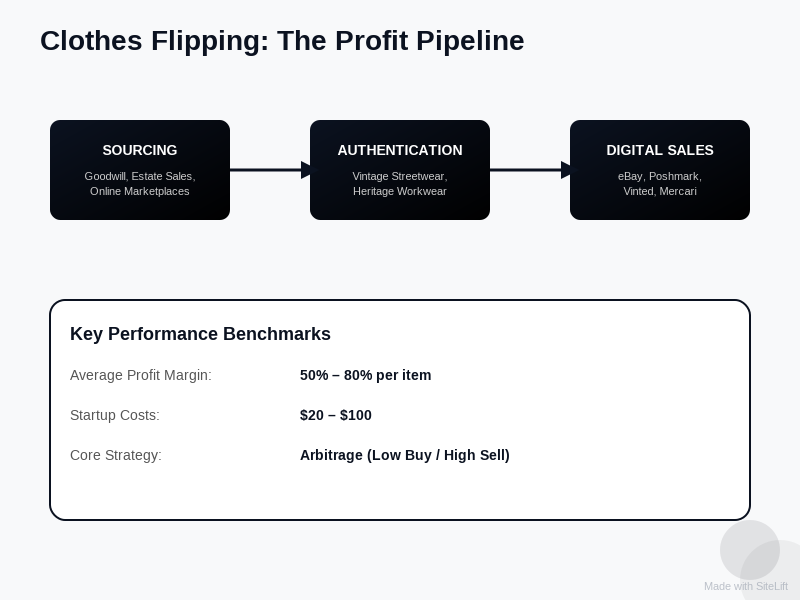
Infographic by SiteLift
Choosing the Right Platform: eBay vs. Poshmark vs. Vinted vs. Mercari
Each marketplace attracts a different demographic and operates under distinct fee structures:
| Platform | Fee Structure | Best For | Audience & Vibe |
|---|---|---|---|
| eBay | ~13-15% total final value fee | Vintage, rare collectibles, menswear, outdoor gear | Global, search-driven buyers comparing sold comps |
| Poshmark | Flat $2.95 (under $15) or 20% | Mid-to-high end womenswear, trendy shoes, designer | Social-focused app users; thrives on likes and shares |
| Vinted | 0% seller fee (buyer pays protection fee) | Fast-fashion, everyday streetwear, quick closet flips | Budget-conscious shoppers looking for cheap shipping |
| Mercari | ~10% plus payment processing fees | General apparel, mid-tier activewear, bundles | Casual buyers looking for deals and counteroffers |
Photography, Keywords, and SEO for Fashion Listings
Good photos and key search terms turn passive browsers into paying customers.
- Clean Lighting: Shoot photos in bright, indirect sunlight against a clean, neutral background (a plain white wall or light wooden floor works great).
- Multiple Angles: Include photos of the front, back, brand tag, fabric care tag, size tag, and close-ups of any flaws, tears, or stains.
- Search-Optimized Titles: Format your listing titles using structured keywords:
[Brand] + [Gender/Age] + [Item Type] + [Style/Model] + [Size] + [Color/Pattern/Features]. For example: Carhartt Men's Detroit Jacket J97 Duck Canvas Vintage Brown XL. - Include Measurements: Always list pit-to-pit and top-to-bottom measurements for tops, plus waist and inseam measurements for bottoms. Secondhand clothing can shrink or stretch over time, and offering exact measurements cuts down customer return rates significantly.
Smart Pricing Strategies and Handling Offers
To price items competitively, search for sold listings on eBay or Poshmark—never rely on active listing prices, as sellers can ask for whatever they want.
Price your inventory 10% to 15% higher than your target sale price. Buyers on resale platforms love feeling like they scored a deal, so building in room to send and accept counteroffers speeds up your inventory turnover.
How Do You Scale a Clothes Flipping Side Hustle?
Once you make your first few sales, you will quickly notice your home filling up with shirts, jackets, and mailers. Scaling your operations requires smart organization and disciplined financial tracking.
  REINVESTMENT FLYWHEEL
  =====================
  [Initial $50 Capital] ---> Buy 5 Thrift Store Tops ($10 ea)
                                     │
                                     ▼
                            Sell Online for $150 Total
                                     │
                                     ▼
  [Reinvest $150 Profits] -> Buy High-Value Vintage Outerwear
                                     │
                                     ▼
                            Scale to $500+ Weekly Income
Inventory Management and Storage Solutions
A clear inventory storage system prevents lost items and shipping delays:
- Clear Poly Bags: Once an item is photographed and measured, fold it neatly and seal it inside a clear protective poly bag.
- SKU System: Label each bag with an inventory number (e.g., BIN-A1, BIN-A2).
- Storage Bins: Store poly-bagged garments inside plastic totes organized by bin number. When an item sells, look up its SKU code and pull it out without digging through piles of loose clothes.
Optimizing Packaging and Shipping Expenses
Shipping costs can eat away your margins if you are not careful. Use these actionable clothing arbitrage tips to protect your profits:
- Invest in a Digital Shipping Scale: Weigh items accurately in their mailer to avoid overpaying at the post office counter.
- Use Lightweight Poly Mailers: For items under 1 lb (such as t-shirts, shorts, and light blouses), pack them in poly mailers and buy USPS Ground Advantage postage through discounted shipping services like Pirate Ship or eBay Labels.
- Leverage Flat-Rate Envelope Options: Heavy items like denim jeans, winter sweaters, or light jackets often fit inside a USPS Priority Mail Flat Rate Padded Envelope, offering low flat-rate shipping anywhere in the country.
Reinvesting Profits to Build a Consistent Business
To move from a low-level side hustle to a high-earning business, reinvest your initial profits back into higher-grade inventory.
Transition from buying $5 thrift items to purchasing higher-ticket vintage coats, designer jackets, and bulk inventory lots. Higher-priced items take the same amount of time to photograph and ship as cheap items, but they generate far higher absolute profits per transaction.
Why Online Arbitrage Is the Underrated Future of Clothes Flipping
When I started reselling clothes, I spent hours every weekend driving between thrift stores, sifting through hundreds of picked-over racks, only to walk out with two or three decent items. Physical thrifting can be fun, but it doesn't scale easily.
The real shift in my reselling came when I stopped relying entirely on local thrift store racks and turned to online arbitrage.
Thousands of mislabeled or underpriced clothing listings are posted to online marketplaces every single day. Casual sellers clear out closets, list expensive vintage Carhartt jackets for $15 under generic names like "brown jacket," and accept the first offer that comes along.
  TRADITIONAL THRIFTING vs. ONLINE ARBITRAGE
  --------------------------------------------------------------
  Feature          Physical Thrifting      Online Arbitrage
  --------------------------------------------------------------
  Time Spent       2-4 hours per trip      Automated alerts
  Geography        Limited to local area   Nationwide supply
  Scalability      Low (Physical fatigue)  High (Systemized)
  Deal Speed       First to walk in store  First to click listing
  --------------------------------------------------------------
If you spend all your time driving to physical stores, you miss out on underpriced online inventory that sells in minutes. Automating your deal search gives you a clear edge over casual resellers.
Supercharge Your Clothing Arbitrage with Find & Flip
Hunting down underpriced clothes online takes time if you do it manually across multiple browser tabs.

That is why we built Find & Flip—a specialized deal finder built for resellers looking to buy low and sell high across top digital marketplaces.
Instead of refreshing search results all day, Find & Flip tracks marketplace listings, flags underpriced items based on real market comps, and alerts you to flipped deals instantly.
Whether you hunt for vintage outerwear on Facebook Marketplace or search for bargain clothing lots, check out our deal finder tools and pick the right plan on our pricing page to start spotting profitable flips automatically.
— findandflip.io
Frequently Asked Questions About Clothes Flipping
Is clothes flipping still profitable in 2024?
Yes, clothes flipping remains highly profitable in 2024. Demand for vintage, secondhand, and sustainable apparel continues to outpace traditional retail growth. Resellers who focus on high-demand brands, accurate pricing, and digital deal-sourcing techniques consistently generate strong profit margins.
What are the best brands to flip for high profit margins?
Some of the best brands to resell include vintage Carhartt, Patagonia, Lululemon, vintage Nike, Levi's (especially Made in USA denim), Arc'teryx, and Filson. Vintage streetwear, 90s graphic t-shirts, and specialized heavy outerwear generally yield higher margins than fast-fashion labels.
How much money do I need to start flipping clothes?
You can start clothes flipping with as little as $20 to $50. Sourcing a few items at local thrift stores, estate sales, or outlet bins allows you to list your first batch of inventory. As items sell, you can reinvest your earnings into higher-margin products and expand your inventory.
Which selling platform is best for clothes flipping: Vinted, Poshmark, or eBay?
Each platform serves a distinct audience. eBay is best for reaching global buyers interested in vintage items, menswear, and rare collectibles. Poshmark excels for mid-to-high end women's fashion and activewear. Vinted is great for lower-priced fashion items, fast turnover, and zero seller fee listing. Many successful flippers cross-list their inventory across multiple platforms.
Do I need to wash or clean thrifted clothes before reselling them?
Yes, you should clean every pre-owned garment before shipping it to a buyer. Steam or wash items according to their fabric care tags, remove pet hair with a lint roller, and use a fabric shaver to remove pilling. Delivering clean, well-cared-for items prevents buyer disputes and leads to positive feedback.