
Mastering facebook marketplace flipping is one of the fastest ways to build a high-margin side hustle or a full-time reselling business. While traditional retail arbitrage often requires navigating strict platform rules, paying heavy merchant fees, and waiting weeks for inventory payouts, local flipping puts cold, hard cash in your hand the very same afternoon.
Every single day, regular people list high-end furniture, commercial-grade power tools, and vintage electronics for pennies on the dollar simply because they are moving, decluttering, or completely unaware of what their possessions are worth. If you understand how to spot those diamond-in-the-rough listings before anyone else, you can turn a modest weekend bankroll into serious monthly profit.
What Is Facebook Marketplace Flipping and Why Is Local Arbitrage So Lucrative?
At its core, facebook marketplace flipping is the process of purchasing underpriced goods from local private sellers and reselling them elsewhere—or right back on the same platform—for their true fair market value. It represents a refined evolution of traditional garage sale sourcing, bringing the thrift store treasure hunt straight to your smartphone screen.
According to data compiled by Statista, Facebook Marketplace reached over 1 billion active monthly users worldwide. That massive user base creates an unmatched volume of daily listings in nearly every zip code across the United States. Where traditional ecommerce businesses face steep overheads, local online arbitrage offers an exceptionally lean financial model.
The Mechanics of Local Online Arbitrage
Unlike Amazon FBA or standard eBay operations, a local arbitrage strategy eliminates the three largest profit killers in ecommerce: shipping carriers, packaging materials, and third-party merchant transaction fees. When you buy locally, you inspect the item with your own eyes, pay without processing fees, and transport the product in the trunk of your car.
When it comes time to liquidate your inventory, selling locally for cash provides immediate liquidity. If an item is small, highly collectible, and light enough to ship economically, you can easily pivot to platforms like eBay or Mercari to capture top-dollar national pricing. You control your margins from end to end.
Why Sellers Price High-Value Items Below Market Value
Resellers often ask: Why would someone sell an authentic mid-century modern credenza worth $800 for just $60?
The answer comes down to seller motivation. Most people using classified apps are not commercial liquidators; they are everyday homeowners facing immediate lifestyle frictions.
- Relocation deadlines: When a moving truck arrives on Sunday morning, an unshifted solid oak dresser becomes an emergency disposal problem, not a financial asset.
- Storage unit downsizing: Renting storage costs between $100 and $300 per month. Sellers will fire-sale bulky gear to avoid another month's recurring billing cycle.
- Inherited estates and lack of pricing research: Family members cleaning out an older relative's home often group items into broad bins ("old stereo equipment," "brown desk") without checking model numbers or designer stamps.
- The "get it out of my garage" factor: Spouses demanding reclaimed parking space frequently price functional riding lawn mowers and gym gear at giveaway prices simply to clear square footage by the weekend.
What Are the Most Profitable Categories for Facebook Marketplace Flipping?
Not all inventory yields equal returns on investment. Sourcing oversized, cheap flat-pack particle board furniture wastes fuel and storage space for minimal profit. If your goal is reliable, sustainable reselling for profit, concentrate your sourcing budget on goods that hold residual value, offer easy mechanical inspection, and appeal to high-intent buyers.
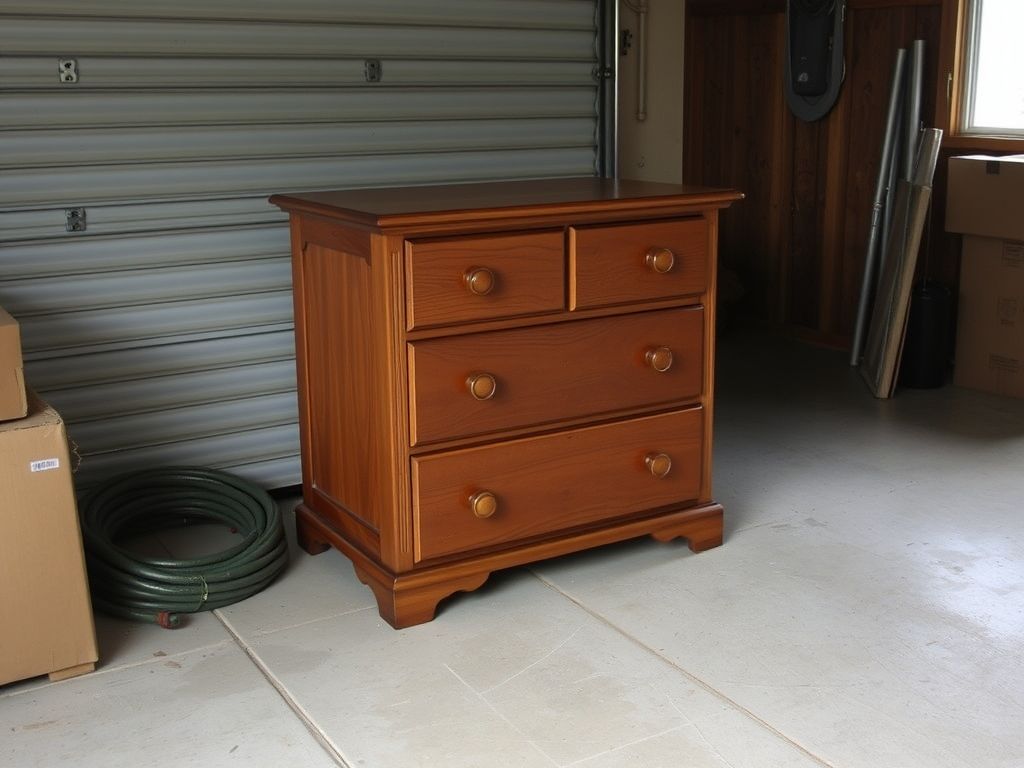
Solid Wood & Vintage Furniture
Mass-manufactured modern furniture from big-box stores depreciates rapidly, but solid wood constructions retain enduring value. Mid-century modern (MCM) aesthetics, solid walnut dining sets, and pieces from sought-after brands like West Elm, Ethan Allen, Pottery Barn, and Herman Miller represent massive profit spreads.
When sourcing furniture, look for dovetail drawer joints, maker's marks inside the top drawer, and solid wood backings. Often, a piece listed as an "ugly old dresser" requires nothing more than thirty minutes with a damp rag, some mineral spirits, and a coat of natural wood wax to reveal an underlying $400 piece of craftsmanship.
Pro Tip: Avoid painted particle board and MDF at all costs. You cannot easily restore swollen water-damaged laminate, and buyers will actively negotiate you down to zero.
Consumer Electronics & Video Game Consoles
Electronics offer some of the highest dollar-to-weight ratios in the reselling world. Older gaming consoles (Nintendo 64, GameCube, PlayStation 2), vintage audio receivers (Marantz, Pioneer, Sansui), and current-generation gaming handhelds move remarkably fast.
The key to discovering gold in this category is finding "lot" sales. Parents frequently bundle a gaming console with ten to fifteen games, two controllers, and cords under a generic title like "Old Video Games." The individual games alone may cover your entire purchase price, leaving the console and accessories as pure, unadulterated profit.
Power Tools, Lawn Equipment, and Sporting Goods
Contractors, landscapers, and DIY enthusiasts are constantly looking to buy commercial-grade equipment without paying retail store prices. Brands like Milwaukee, DeWalt, Makita, and Honda hold predictable value year after year.
Look for tools sold by homeowners who bought them for a single weekend patio renovation or landscaping overhaul:
- Gas-powered pressure washers and Honda-engine lawn mowers
- Cordless brushless drill bundles with lithium-ion batteries and chargers
- High-end golf clubs (Callaway, Titleist, TaylorMade) and commercial gym weights (kettlebells, Olympic plates)
Keep seasonal cycles in mind: buy snowblowers in mid-summer when sellers want them out of their sheds, and buy lawn mowers, kayaks, and camping equipment in the depths of January.
How Do You Find Underpriced Items on Facebook Marketplace?
The best deals rarely sit on the feed for more than fifteen minutes. If you open your app and browse the standard algorithm feed, you are looking at listings hundreds of other resellers have already passed on. To reliably find underpriced items, you have to hunt proactively using unconventional search methodologies.
Exploiting Misspelled Keywords and Poor Listing Titles
Casual sellers do not write search-engine-optimized listing titles. They write quick, phonetically guessed labels while typing one-handed on their smartphones. If you search solely for "PlayStation 5" or "Herman Miller Aeron," you are competing against every experienced flipper within a fifty-mile radius.
Instead, build a personal lexicon of common typos, brand misspellings, and ultra-generic descriptors:
- Search for "Playstashion," "Plastation," or simply "gaming system."
- Hunt for "Eames chair," "Miller chair," or "mesh office chair" instead of official brand references.
- Try misspellings like "DeWault," "Milwakee," or generic queries like "tool set with case."
- Use broad, naive terms: "old camera," "vintage record player," "wood hutch," "heavy table."
These mislabeled listings are completely invisible to automated keyword buyers, allowing them to linger under the radar for hours or days while you secure an uncontested discount.
+---------------------------+-----------------------------------+
| What the Pro Searches For | What the Average Seller Lists As  |
+---------------------------+-----------------------------------+
| Herman Miller Aeron Chair | "Mesh computer chair"             |
| Marantz 2270 Receiver     | "Old silver stereo box"           |
| Vintage Pyrex Bowls       | "Grandma colorful mixing bowls"   |
| Milwaukee M18 Fuel Set    | "Red cordless drills w/ charger"  |
| Le Creuset Dutch Oven     | "Heavy orange cast iron soup pot" |
+---------------------------+-----------------------------------+
Targeting Poor Photo Quality and Vague Descriptions
Do not scroll past dark, blurry, out-of-focus, or cluttered photos. In fact, those are precisely the listings you want to inspect first.
A terrible cover photo acts as a natural moat, scaring off amateur resellers who want pristine, catalog-quality product shots before reaching out. An estate listing showing a dark, dusty garage with items piled haphazardly often conceals vintage audio gear, high-end cast iron, or commercial toolboxes. Zoom in on background details. Look for recognizable silhouettes, distinct colorways (like Festool green or DeWalt yellow), and hardware designs that signal premium manufacturing.
Leveraging Automated Deal Alerts and Aggregation Tools
Manual refreshing cannot beat automated software. If you rely entirely on native notification bells, Facebook often alerts you hours after a listing has gone live—long after someone else has loaded it into their truck.
Serious local arbiters deploy dedicated aggregation platforms to monitor local zip codes in real time. Resellers utilizing the Find & Flip Marketplace Deal Finder can scan local feeds continuously, surfacing mispriced opportunities based on real-time comps and predictive value analysis.
Rather than spending four hours a day manually typing queries into multiple accounts, you can streamline deal tracking through the Find & Flip browser extension, setting custom parameter triggers that alert you the moment a target product hits the marketplace below historical resale values.
How Should You Negotiate, Inspect, and Close Deals Safely?
Knowing how to flip items on facebook is only half the battle; closing the deal quickly and coming home with intact merchandise is where execution matters. Because Facebook Marketplace lacks an intermediary escrow service for local sales, the burden of inspection, negotiation, and personal safety rests on your shoulders.
Respectful Negotiation Tactics for Maximum Profit
The fastest way to get your message ignored by a private seller is firing off an automated button message ("Is this available?") followed immediately by a 60% lowball offer. Sellers view these interactions as spam and will ghost you without hesitation.
To secure steep discounts without alienating the lister, lead with respect, speed, and logistical convenience:
"Hi [Seller Name]! I love the piece and can pick it up today at your convenience. I have cash in hand and a truck ready to load it myself so you won't have to lift a finger. Would you consider $80 for a quick, hassle-free pickup this afternoon?"
Notice the structural elements of this message:
- You confirm immediate availability.
- You remove all physical effort from their plate (truck ready, loading it yourself).
- You offer cash payment.
- You frame your discounted offer as a trade-off for convenience and speed.
Sellers will routinely accept a lower offer from a polite buyer who promises to arrive within two hours over a full-price offer from an unreliable buyer demanding delivery next weekend.
On-Site Inspection Strategies to Avoid Scams
Never hand over cash until you have performed a thorough physical and operational inspection. Once paper money changes hands on a driveway, the transaction is finished; there are no refunds on Marketplace.
Carry a standard inspection kit in your vehicle:
- For electronics: A portable power bank, appropriate charging cables (Lightning, USB-C, micro-USB), and a mobile Wi-Fi hotspot to verify devices connect to networks and aren't iCloud- or account-locked.
- For power tools: A fully charged universal battery pack or a small power inverter plugged into your vehicle's 12V outlet to test corded tools on-site.
- For furniture: A pocket flashlight to check joints, structural undersides, and corners for hidden cracks, wood rot, or evidence of pests.
Pro Tip: When buying modern smartphones or cellular tablets, always ask the seller for the IMEI number beforehand and run it through a free database to ensure the unit is not blacklisted or reported lost or stolen.
Essential Safety Guidelines for Local Pickups
Safety must always supersede potential profit margins. While the overwhelming majority of marketplace encounters are completely benign, you are meeting strangers from the internet.
- Meet during daylight hours: Avoid after-dark meetups whenever possible. If you must meet in the evening, stick exclusively to brightly lit commercial plazas.
- Utilize Safe Exchange Zones: Many municipal police departments designate monitored parking spaces outside their stations specifically for online classified meetups. These spots feature 24/7 video surveillance.
- Bring a wingman for bulky pickups: If an item requires stepping into a private residence (such as moving a heavy solid wood dining table out of a basement), never go alone. Bring a friend or partner to assist with lifting and maintain general situational awareness.
- Maintain cash discipline: Keep purchase funds in an accessible pocket separate from your primary wallet, and count the cash out discreetly in front of the seller after reaching total agreement on condition.
How Do You Relist and Sell Your Items for Maximum Profit?
Sourcing low is only the first phase of the cycle. Your inventory's real margin is determined by how professionally you repackage, present, and position the item when it's your turn to sell. The difference between an amateur listing and a professional showcase can easily double your exit price.
Professional Staging and Product Photography Tips
Most casual sellers take a single, dimly lit photo inside a messy garage. You are going to do the opposite:
- Wipe it down: Clean dust, fingerprint smudges, and surface grime off every surface. A $3 bottle of glass cleaner and a microfiber towel can add $50 to an electronic listing's value in five minutes.
- Lighting is everything: Natural indirect daylight is the gold standard. Take items outside on an overcast day or stage them next to a large window. Avoid harsh, direct midday sunlight that blows out contrast.
- De-clutter the backdrop: Position furniture against a clean, neutral interior wall. For smaller tabletop goods, invest in an inexpensive white foam core board from a craft store to create a seamless infinity backdrop.
- Show all angles: Provide a minimum of 6 to 8 photos, including wide shots, detailed close-ups of brand badges, serial numbers, operational displays, and honest shots of any minor cosmetic blemishes.
Writing SEO-Optimized Listings That Sell Fast
Search engines inside Facebook Marketplace, OfferUp, and eBay rely heavily on your item's title and description to match you with active buyers.
Structure your listing titles with high-intent keywords:
- Formula:
[Brand] + [Model/Style Name] + [Item Type] + [Key Spec/Color/Material] - Example: Herman Miller Aeron Office Chair - Size B - Fully Loaded PostureFit Graphite
In the body of your description, adopt an informative, professional tone. Detail the dimensions, the aesthetic condition, full working order, and what is included in the sale (cords, remotes, original boxes).
State your pickup terms plainly: "Cash or Venmo preferred. Pickup near Downtown Oak Park. Delivery available within 10 miles for a small fee."
Strategic Pricing and Multi-Platform Crossposting
To maximize turnover velocity, do not limit yourself to a single storefront.
According to research from ThredUp's Resale Report, the global secondhand market will reach $350 billion by 2027. This explosive growth means millions of buyers shop across diverse platforms depending on their generation and shopping habits.
- Bulky, heavy items (sofas, tables, lawn equipment): List concurrently on Facebook Marketplace, OfferUp, and Craigslist.
- Small, lightweight, high-value goods (designer sunglasses, vintage cameras, rare retro games): Cross-post directly to eBay and Mercari.
When pricing your items, check recent eBay Sold Comps rather than current active asking prices. Active listings reflect what sellers hope to get; completed, paid sales reveal what actual humans are currently paying. Price your item approximately 10% to 15% below top eBay retail if you want to turn it over within 48 hours locally.
Key Takeaways: Mastering the Local Flip
Before diving into our editorial perspective, here is a quick reference summary of the operational framework every successful reseller follows:
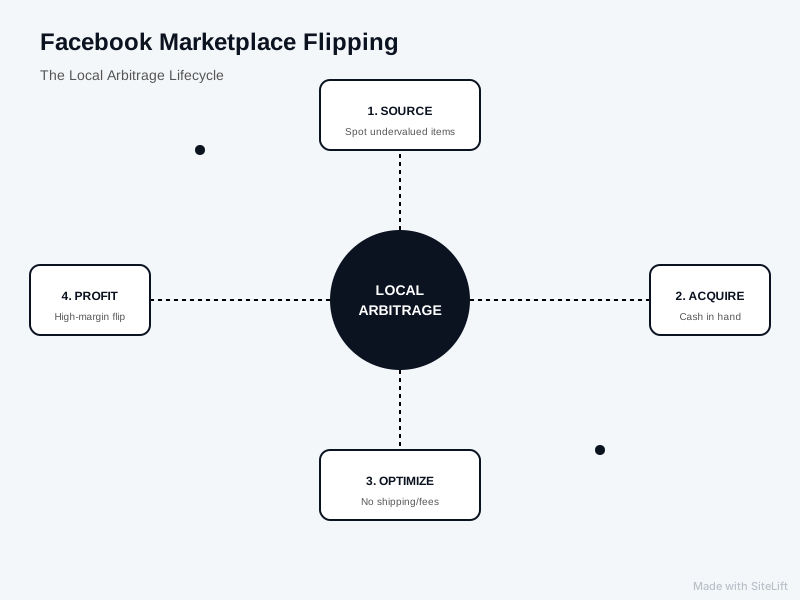
Infographic by SiteLift
| Phase | Operational Focus | Golden Rule |
|---|---|---|
| Sourcing | Typo searches, mislabeled titles, poor photos | Look where other flippers are too lazy to dig. |
| Vetting | Compare against recent completed sales | Never price off active listings; use historical sold data. |
| Outreach | Fast response, cash offer, frictionless pickup | Solve the seller's logistical problem first. |
| Inspection | Operational tests, battery power, serial checks | Once cash exchanges hands, the deal is final. |
| Relisting | Clean background, natural light, detailed specs | Professional photos command professional prices. |
Why Sweat Equity in Local Arbitrage Beats Drop Shipping Every Time
There is no shortage of internet gurus preaching passive income through automated dropshipping, retail print-on-demand, or faceless ecommerce storefronts. Most beginners who pursue those routes end up sinking thousands of dollars into Facebook ad spend, only to end up with razor-thin margins, suspended ad accounts, and months of logistics headaches dealing with overseas manufacturers.
Local marketplace flipping is distinctly different: it is tangible, immediate, and mathematically grounded. When you buy a solid walnut mid-century credenza from an estate cleanout for $75, sand down a water ring, buff it with Danish oil, and hand it over to a young couple three days later for $550, you have generated $475 of real, verifiable wealth. You haven't paid ad networks. You haven't dealt with maritime shipping delays. You traded your observational skill and a bit of physical sweat for immediate return on capital.
Local arbitrage is not a passive revenue stream; it is a tactical, high-leverage skill that pays immediate dividends to those willing to do the physical work. — findandflip.io
According to eBay's Recommerce Report, 80% of secondary market sellers began reselling to supplement their income during periods of inflation. It remains the most democratized side business available today. Anyone with a smartphone, a reliable vehicle, and a sharp eye can bootstrap their way from a $100 starting budget into a thriving local enterprise.
Scaling Your Sourcing with Smart Automation
Once you understand the basic mechanics of local sourcing, your single biggest limiting factor becomes time. You cannot physically sit at your desk refreshing classified apps every ninety seconds while managing your daily job, family commitments, and existing inventory deliveries.
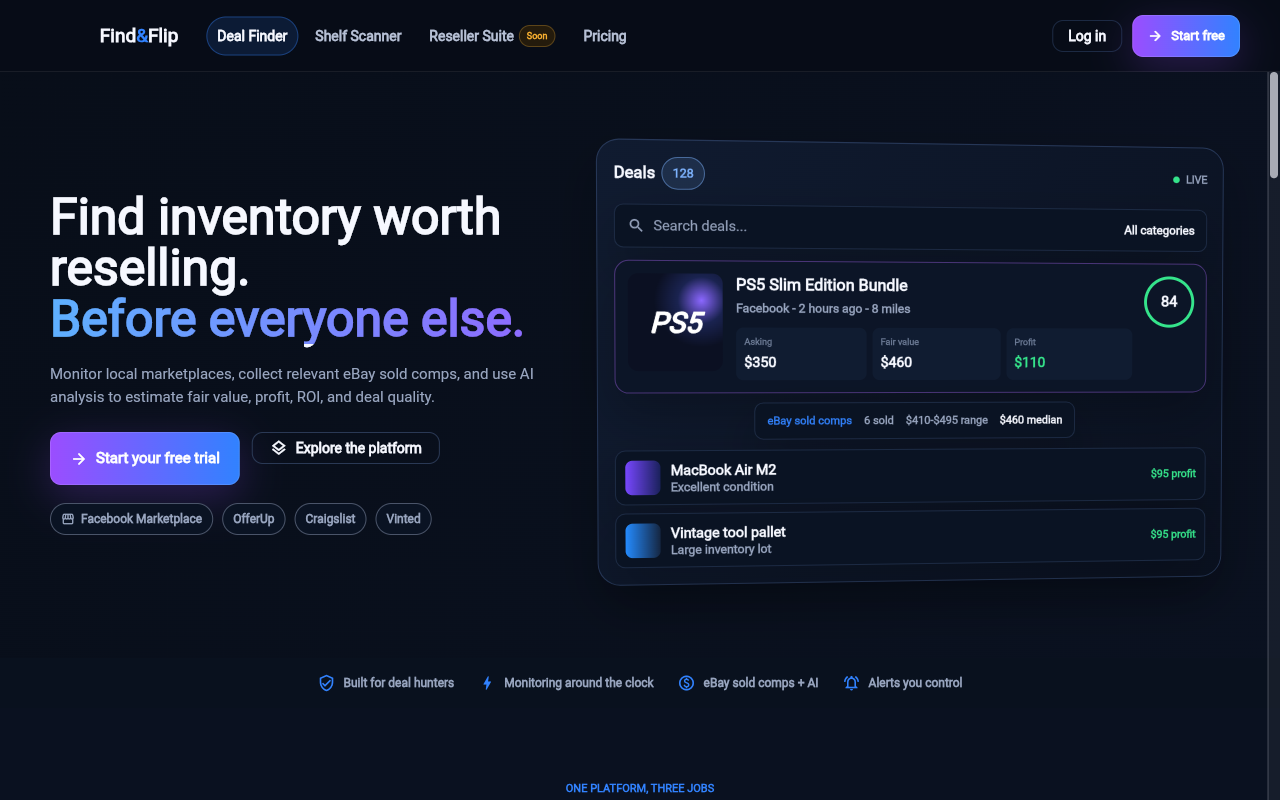
This is where integrating technology transforms a frantic hobby into an efficient sourcing machine. The FindAndFlip platform was created specifically to eliminate manual searching friction. By utilizing automated algorithms that monitor regional feeds across Facebook Marketplace and OfferUp, the software instantly analyzes incoming listings, compares them against current market value benchmarks, and flags genuine price anomalies before they gain mainstream visibility.
Instead of guessing whether an item has enough meat left on the bone to justify a trip across town, modern resellers use comprehensive algorithmic evaluations to calculate projected profit margins instantly. When you combine street-level hustle with automated software notifications, you secure a decisive advantage over every casual browser in your local market.
Frequently Asked Questions About Facebook Marketplace Flipping
How much money can you realistically make flipping items on Facebook Marketplace?
Part-time resellers dedicating 5 to 10 hours per week typically generate between $500 and $2,000 in monthly net profit once they understand their local markets and high-margin product niches. Full-time flippers who specialize in bulky goods like vintage furniture, commercial power equipment, or major appliances often exceed $5,000 to $10,000 a month. Your profitability depends entirely on your sourcing consistency, vehicle hauling capacity, and reinvestment discipline.
What items sell the fastest on Facebook Marketplace?
The fastest-moving items are almost always current-generation video game consoles (PS5, Nintendo Switch OLED), official Apple electronics (iPhones, AirPods, MacBooks), clean solid wood dressers, brand-name cordless power tools (Milwaukee, DeWalt), and reasonably priced lawn equipment during early spring. Items priced 20% below current fair market value in these high-demand categories will often sell within two to three hours of posting.
How do you spot counterfeit or stolen goods when buying locally?
Be wary of brand-new, factory-sealed electronics priced significantly below retail from accounts created very recently or profiles displaying no local activity, friends, or identifiable photos. When buying high-end electronics, insist on receiving serial numbers or IMEI codes to check against national databases before driving out. For luxury designer goods, look for original purchase receipts, verify brand stamps and stitching quality in person, and run images through dedicated authentication communities before handing over payment.
Should I accept digital payments like Zelle and Venmo or stick strictly to cash?
Cash is the undisputed gold standard for local marketplace deals because paper currency cannot be reversed, canceled, or charged back once you drive away. If you decide to accept digital payments, opt for in-person Zelle or Venmo transfers made while the buyer is standing directly in front of you. Never accept checks, avoid third-party delivery courier setups, and never trust a buyer who claims they sent an "overpayment" requiring an email confirmation code or a secondary processing fee.
Do you have to pay taxes on profits from Facebook Marketplace flipping?
Yes. In the United States, profits generated from flipping items—defined as selling an asset for more than your total cost basis (the purchase price plus any repair or supply costs)—are classified as taxable income by the IRS and state taxing authorities. It is crucial to maintain a meticulous bookkeeping spreadsheet logging purchase receipts, resale amounts, mileage, restoration materials, and platform fees so you can accurately report your net capital gains or business income come tax season.